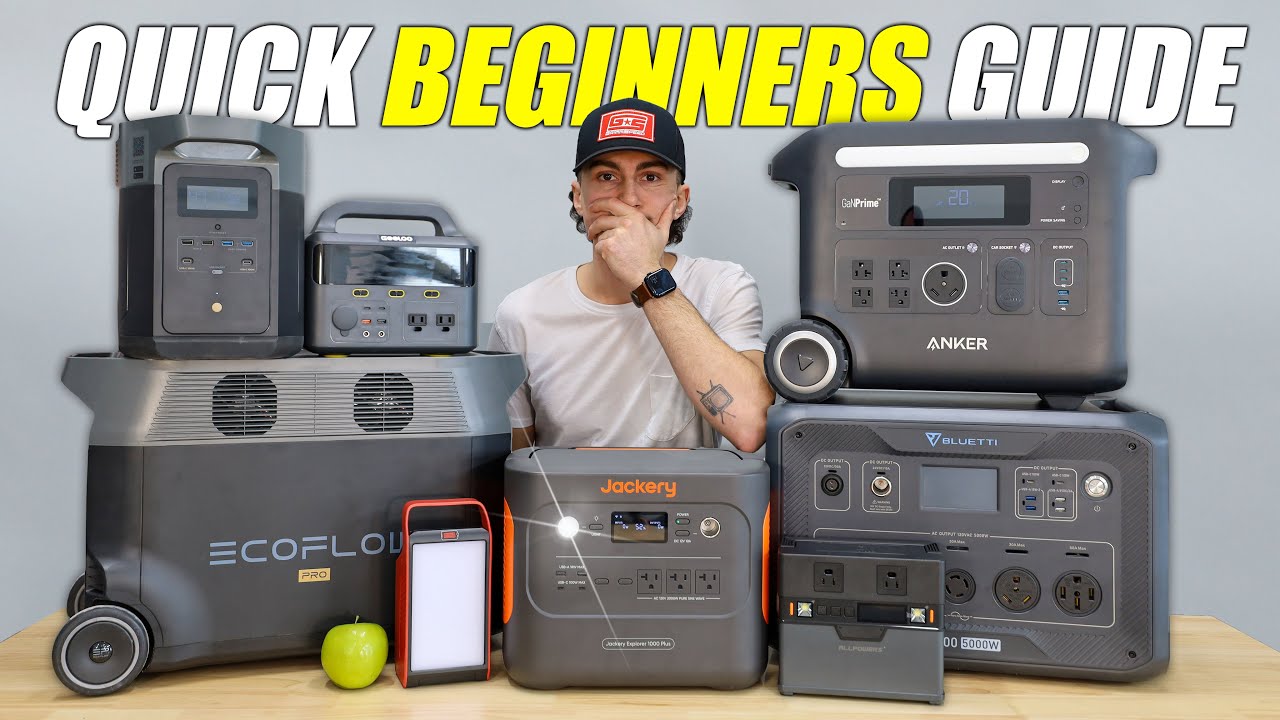
Portable Power Station Buying Guide for Beginners
Introduction: Power Up Your Off-Grid Life with a Portable Power Station
Welcome to Off-Grid Tech Guide, your go-to resource for cutting-edge off-grid solutions. If you're new to the world of portable power, a Portable Power Station (PPS) is an essential device that can revolutionize your camping trips, emergency preparedness, or even provide robust backup for your home. These all-in-one units combine a powerful battery, an inverter to convert DC to AC power, and multiple output ports, making them incredibly versatile.
Unlike traditional generators, PPS units operate silently, produce zero emissions, and require no fuel beyond an initial charge. This guide will walk beginners through the key considerations for choosing the right portable power station for their specific needs, featuring some of the best options available on the market today.
What to Look For: Key Features and Specifications
Understanding the core specifications of a portable power station is crucial for making an informed purchase. Don't get overwhelmed by the numbers; we'll break down what really matters.
- Capacity (Wh): Measured in Watt-hours (Wh), this indicates how much energy the battery can store. Think of it like the size of your fuel tank. A higher Wh rating means it can power devices for longer. For example, a 256 Wh unit like the EcoFlow RIVER 2 is great for phones and laptops, while a 6144 Wh beast like the EcoFlow DELTA Pro Ultra can run a whole house.
- Output Power (W): Measured in Watts (W), this is the maximum power the station can deliver at any given moment. This determines what appliances you can run. A 300 W output (e.g., Jackery Explorer 240 v2) can handle small electronics, while 1800 W (e.g., EcoFlow DELTA 2 or Bluetti AC180) can power most kitchen appliances or power tools. Always check the continuous output, not just the surge rating.
- Battery Chemistry: Modern portable power stations primarily use Lithium-ion (Li-ion) batteries, with LiFePO4 (LFP) being the preferred chemistry for off-grid applications. LFP batteries, found in models like the EcoFlow RIVER 2 Max and Bluetti EB55, offer significantly longer lifespans (thousands of charge cycles) and enhanced safety compared to older NMC (Nickel Manganese Cobalt) chemistries.
- Charging Options & Speed: Most PPS units charge via a standard AC wall outlet, car charger, or solar panels. Look for models with fast AC charging, such as the EcoFlow RIVER 2 Pro which boasts incredibly fast 0-100% charging, or efficient solar input capabilities like the EcoFlow DELTA 2 Max's 1000 W solar charging.
- Portability & Durability: Consider the weight and size if you plan to carry it frequently. A lightweight unit like the Jackery Explorer 500 (7.7 kg) is perfect for car camping, while larger units are more suited for fixed setups or occasional heavy lifting. Look for robust build quality and features like an IP rating for water and dust resistance if you expect harsh conditions.
- Output Ports: Ensure the station has the types and quantity of ports you need, including AC outlets, USB-A, USB-C (especially useful for laptops with Power Delivery), and 12V DC car ports.
Matching a Portable Power Station to Your Needs
Choosing the right PPS largely depends on your specific use case. Here are some common scenarios and recommended stations.
For Light Use & Weekend Warriors (Phones, Laptops, Small Fans)
If you primarily need to keep small electronics charged during short trips or minor power outages, a compact and affordable unit is ideal.
- EcoFlow RIVER 2 ($199): With 256 Wh and 300 W output, this unit is extremely portable and offers incredibly fast 90-minute AC charging with a long-lasting LiFePO4 battery.
- Bluetti EB3A ($199): Slightly more capacity at 268 Wh and a higher 600 W output, it’s compact, versatile, and features clever fast-charging technology.
- Jackery Explorer 240 v2 ($199): A popular entry-level choice, offering 256 Wh and 300 W output in a super compact and lightweight design that’s simple to use.
For Extended Camping & Van Life (Mini-fridges, Projectors, Power Tools)
These mid-range stations offer a great balance of capacity, power, and portability for longer outings and more demanding appliances.
- EcoFlow DELTA 2 ($599): An excellent all-rounder with 1024 Wh capacity and a robust 1800 W output, making it ideal for camping, overlanding, and content creation.
- Anker SOLIX C1000 ($699): Offers 1056 Wh capacity and a strong 1800 W continuous output, making it a versatile and powerful mid-sized station.
- Bluetti AC180 ($649): Features 1152 Wh capacity and a super efficient 1800 W output, known for its outstanding performance and impressive build quality.
- Goal Zero Yeti 1000X ($1,099): Provides 983 Wh and a powerful 2000 W output, with impressive cold-weather battery retention, great for more remote adventures.
For Heavy Duty Use & Home Backup (Major Appliances, Extended Power Outages)
When you need serious power for an RV, cabin, or as a home emergency backup, these high-capacity units deliver.
- EcoFlow DELTA 2 Max ($999): A reliable and powerful option with 2048 Wh capacity and 2400 W output, featuring impressive battery performance and efficient 1000 W solar charging.
- Jackery Explorer 2000 Plus ($1,699): Delivers dependable high-capacity power with 2042 Wh and a robust 3000 W output, known for a flawless solar charging experience.
- EcoFlow DELTA Pro ($2,499): Boasts 3600 Wh and 3600 W output, highly versatile for multiple applications with great solar input and energy capacity.
- Bluetti EP500 Pro ($3,499): A massive 5100 Wh battery capacity with a strong 3000 W output, designed for stable and efficient performance in demanding scenarios.
Optimizing Your Setup with Solar Panels
For true off-grid independence, pairing your portable power station with solar panels is essential. This allows you to replenish your battery using renewable energy, keeping you powered indefinitely.
When selecting solar panels, consider their wattage and conversion efficiency. Many portable power stations come with an MPPT (Maximum Power Point Tracking) controller, which optimizes solar input. Always check your PPS's maximum solar input capacity to match it with appropriate panels.
- For small PPS units: A Jackery SolarSaga 40W ($79) or EcoFlow 60W Portable Solar Panel ($99) provides a lightweight and compact charging solution.
- For mid-range PPS units: Panels like the EcoFlow 110W Portable Solar Panel ($149) or Bluetti PV120 ($149) offer a good balance of power and portability. The Jackery SolarSaga 100W ($179) is also an excellent, lightweight choice with superb charging efficiency.
- For large PPS units: Maximize your solar input with higher wattage panels like the EcoFlow 220W Portable Solar Panel ($249), which features a bifacial design for enhanced power, or the Jackery SolarSaga 200W ($349) for high peak output and portability. The Bluetti PV350 ($399) also works well, providing reliable power in a highly portable design.
Tips for Off-Grid Success
To get the most out of your portable power station, remember these practical tips. Always estimate your power needs by summing the wattage of your devices and how long you plan to run them.
Keep your PPS charged, especially if you live in an area prone to power outages. Regular maintenance, such as keeping ports clean and storing the unit in a cool, dry place, will extend its lifespan. Finally, always test your setup before heading out on a critical trip or relying on it for an emergency, ensuring all your devices power up as expected.